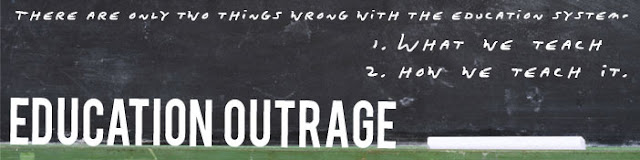
I and (a large team) have been building online courses since I started the Institute for the Learning Sciences (ILS) at Northwestern University in 1989. I started ILS because after watching my kids suffer through school and wondering why things were done that way in school, I thought (since my field was learning) maybe I could change things. But school weren’t interested in changing. Corporations were interested, so we built (and still are building) online courses for them. Occasionally we got to build course for colleges but even when we had built a great course, internal faculty politics usually killed it.
But now, due to Covid, schools are closing and we are all wondering what to do. Putting your courses on line is the obvious answer. But wait. Let me explain what to do and what not to do, following these ten admonitions:
- Do not attempt to copy an existing course
Why not? You teach a great course so why not attempt to copy it?
Once I was talking with another professor about why I thought lectures were not a good idea. He told me he gave great lectures. I said: suppose you go to class and there is only one student there, would you give the lecture? He hesitated and then said “no, but he would miss a great lecture.”
Then why wouldn’t he give one student the lecture? Because in real life we don’t talk at someone we talk with them. The listener typically has a question or a different point of view, and they want to respond with what they are thinking. Conversation is how we learn. No one can learn from someone talking at them for an hour. The reason lectures exist at all is both economic and historical. Before printing books was easy, teachers would read books to their students. (Lecture means “to read”in Latin.) Colleges can make money by stuffing 500 kids in a room with only one teacher. When the Romans decided what needed to be in the curriculum (another Latin word) they chose subjects from what they called the Liberal Arts in an effort to create intellectuals. They were not trying to prepare kids to go to work or live in the real world. They wanted to train rich kids to be Orators in the Forum. It is astonishing that we still do this (given that we don’t need Orators these days.) But the University of Bologna copied this model and all universities have followed. The high school curriculum in the U.S. was created by the President of Harvard in 1892. Harvard was still copying the Roman concept of education and Harvard wanted everyone in high school to be ready for Harvard. From Rome until today school is meant for the rich and for people who will not have to work. Why can’t we change that? Because we have always done. it that way.
So, before you attempt to put your course online you must ask if your course is useful, and the answer can’t be “it will teach you how to think” which what all academics say when they can’t answer questions about the usefulness of what they teach. Knowing stuff and being able to repeat it is not education no matter what the Romans thought. When your child asks you a question you don’t respond with an hour lecture. Long before children first attend school they are little learning machines. They try to do stuff that interests them and when they are stuck they ask someone for help. This is how all humans learn (and animals too but without the ability to ask questions.)
So, before you try to put your course online, you must ask what the students will be able to do after they have taken your course and you must ask if they truly want to be able to do that. If a course doesn’t teach you something that you want to learn how to do, then it is just transferring inert knowledge that will soon be forgotten.
2. No tests
Every year in my first class of a course in September I would ask the class if they could pass the final exams from the courses they took last year? They all agreed they could if they could study first. That didn’t sound crazy to them, but it did to me. Isn’t a test meant to be an assessment of what you have learned in a course? Studying is temporary memorization of stuff you haven’t already retained. We make every kid in the world memorize the quadratic formula so they can pass the test that will inevitably have a question about it. Does anyone who isn’t a mathematician need to know it?
The problem with tests is that their entire point is to enable the teacher to assign a grade. Why do we need grades? For colleges to determine if they should admit you is the usual answer. I used to give every kid an A as long as they showed up and wrote answers to questions I gave them that were intended to start them thinking so we could discuss ideas in class. (I only did this when I got to a point where I was too important to be punished for having done this.)
Kids are so used to grades that they obsess about them. But why? Because they want to get admitted to the next school. I understand that teachers must give grades but while we have a chance to redesign courses we must get rid of them. My driver’s license doesn’t have a grade on it. You have one or you don’t. Someone watched and saw what I could do. In real life there are no grades just assessments of a capabilities based on observed performance.
So, an ideal course has to end in a proof of performance (not of the ability to temporarily memorize.)
For as long a there has been “distance learning” and “computer based training” there has been text on screen followed by a test. This was never a reasonable way to handle education. Putting it online doesn’t improve this terrible methodology.
3. Start with a goal that a student wants to be able to achieve
When you design an online course you must begin with the end in mind. What do you want the student to be able to do at the end? Do they want to learn to do that? Will being able to do that help them in some way? Courses often ignore a student’s real goals and replace them with artificial academic goals.
When I was at Yale I happened to sit in on a class in developmental psychology. It was all women. When I inquired about this the professor told me that these women all expected to be mothers some day and wanted to learn about how to raise a child. Except that is not what they they were teaching in that course. Child raising is not an academic subject, so instead they taught theories about child development. They didn’t care why the students were there.
Many years later my team built a course in how to raise a child (with the help of the developmental psychology faculty at Columbia University.) The student dealt with videos of problem children and taught how to deal with them. Students loved it. But no school would use it. Too practical; no theory.
In order to fix online education we need to fix education. Faculty always seem to want to teach theory and rarely want to teach practice. This has to change. Teachers are rarely practitioners. This has to change as well.
4. Encourage the expression of ideas
Small children always have questions, and ideas and stuff they want to say. Then they go to school and are told to sit down and shut up or they are diagnosed with ADHD because they don’t follow orders. School has always been about paying attention. In the movie “Horsefeathers” Groucho Marx plays the role of a college president. When he is told about a problem arising from too few dormitories he responds by saying that students can sleep in the classrooms like they always do.
We all know all know that students are not paying attention, but we don’t care because they have to pass the test and will study. Classrooms tend to inhibit the expression of ideas. But, good online education does the opposite. We believe in having “cohorts” of students in our online courses. There may be 50 students in a course but there are just 5 that you hang out with. Talk to them and when you are confused you can talk to the teacher (who is more of a mentor than a teacher) and ask for help. A good mentor does not tell you “the answer” but encourages you to find it for yourself. Say your ideas, defend them, find a way to convince others that you are right. This is how a good online course must go. In general, there are no right answers.
5. Teachers are behind the scenes
When we hear the word teacher we immediately think about someone standing in front of a classroom talking at us. But your best teachers were more than likely your parents who never did that. Natural teaching occurs when one has an idea follows their intuitions and nothing goes as planned. You look for someone to ask for help. Providing this help is a teacher’s real job. Most teachers actually know this but the system puts them in a room with 50 kids so they can’t teach in response to a student’s need. They have a curriculum to follow and content to cover. The notion that the teacher is a deliverer of content is simply wrong. Textbooks can do that (badly).
A good online course employs mentors not teachers. A mentor is someone who is only there when you need them.
6. Build in failure
If you don’t fail you don’t learn. All good online courses set up the student for failure. Course need to have situations in which a student’s job is to figure out a real problem. “We’ve been hacked. Figure out what happened.” “Our business is running out of money, figure to why.” The engine isn’t running. Why?” “The patient is dying, help him.”
Set up a problem the students will find interesting and make the student try to figure out a solution, not to a math problem, but to a real life problem. Provide help as warranted.
That is all there is to online education.
Why don’t we do that in classroom? Because each student would have their own ideas, different solutions, and need different kinds of help. School demands that every child be on the same page at the same time, an idea so stupid it is hard to believe we do that.
7. Make it emotional
Humans are emotional and people oriented. Why do many students (girls more than boys) because it is barren of feelings and emotional substance. History is more interesting when it is about real people rather battles and ideology.
We built a course that taught doctors how to tell patients that they have cancer. We employed videos that were heart wrenching (just good actors actually) and they were hard to forget because they made students feel something.
We built a history course that relied on real people telling stories about decisions that were made in similar situations and how they worked out. Some of these stories were hard to forget. After the first Gulf War we asked an advisor to the first George Bush why they decided not to kill Saddam Hussein. He said “do know what would happen if we killed Saddam?” He then laid it in detail the events that followed 10 years later when we did kill Saddam. I remember his final words “it would be a bloodbath.”
I have that video on my laptop and often show it when I am talking to the US government about building online courses. It always has a tremendous impact.
8. Use just in time stories
We collect stories (usually about 1.5 minutes long) from experts, the kind of stories people tell when they are in a conversation. We learn a great deal from stories people tell when we can relate to them. So, the first thing we do when we build an online course is collect stories from experts. We engage them in conversation (with the camera showing only the interviewee) and in the end we have hundreds of stories that we can use just in time as appropriate in the course. We learn a great deal when we do these interviews. We learn about the domain and we learn about the people in the domain. The course should provide that same entree into a domain. Talk with enough doctors and you begin to understand how they think, what they know, and what they don’t know.
You want an online courses to be full of experts ready to jump in as needed.
9. Students must have other people to talk to
Most online course are lonely experiences. One person staring at a screen. If the online course really is a copy of a classroom there may well be other people around but not ones you can easily talk with. People like to talk to other people. In our online courses students talk to each other all the time. They can figure things out together. The mentor can meet one on one but also schedules regular sessions with a small group. Online courses must include regular interactions that are both enjoyable and interesting or they are hard to endure.
10. Make it fun
Learning something new is enjoyable. We revel in acquiring new skills. We like to show off what new things we can do. It is fun. I do not mean that learning is a game where one laughs a lot. People enjoy learning new skills that they wanted to learn. No one ever learned how to drive a car who wasn’t excited to show off their new ability and go for a drive.
The Coronavirus Pandemic has offered a solution to education that have plagued our world for many years.
“Failure is instructive. The person who really thinks learns quite as much from his failures as from his successes.”
― John Dewey
“Tell me and I forget, teach me and I may remember, involve me and I learn.”
― Benjamin Franklin
A general State education is a mere contrivance for moulding people to be exactly like one another; and as the mould in which it casts them is that which pleases the dominant power in the government, whether this be a monarch, an aristocracy, or a majority of the existing generation; in proportion as it is efficient …
—J.S. Mill
Good online learning changes all that. We can fix it now. Start Designing.